How to make calorie counting easier: 12 tips that work
Calorie counting doesn't have to be a chore. 12 research-backed tips, plus an honest comparison of tracking methods to find the one you'll actually stick with.
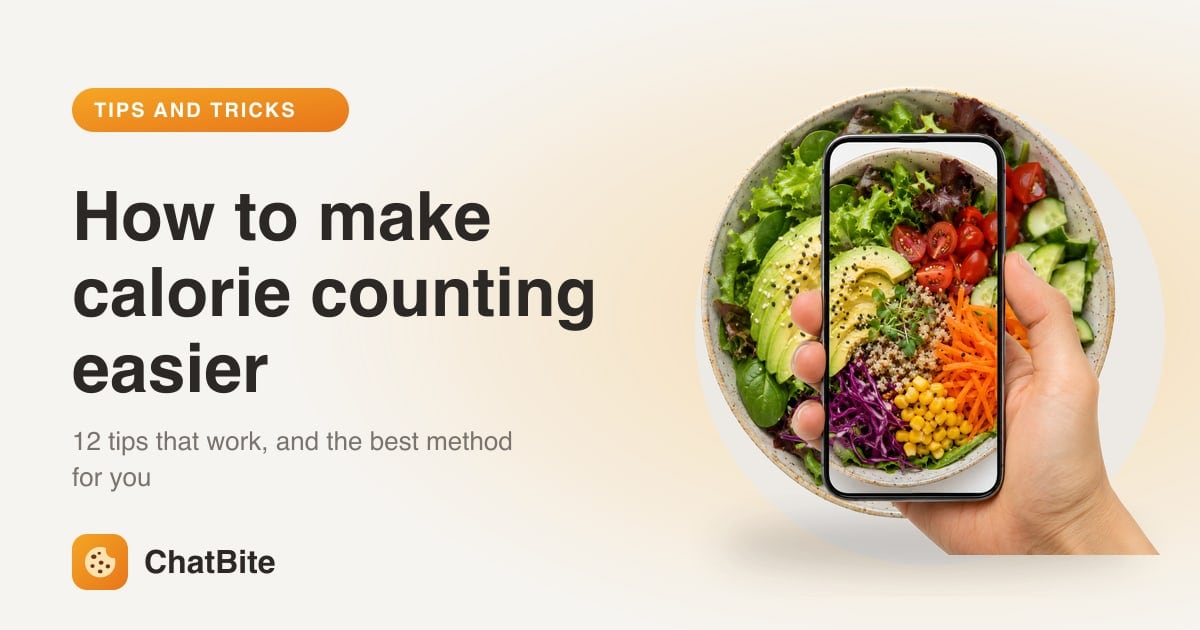
The easiest way to count calories is to log often in small, quick bursts, using a method fast enough that you'll still do it on a busy Tuesday. Precision matters less than consistency: research links frequent logging to better results, while most people quit tracking because it's tedious, not because it doesn't work. Below are 12 practical tips, followed by an honest comparison of the main tracking methods so you can pick the one that fits your life in 2026.
Why is calorie counting so hard to stick with?
Two reasons come up again and again. First, it takes time: searching a database, picking the right entry and entering grams for every item adds up over several meals a day. Second, people are not very good at remembering what they ate. In a well-known study in The New England Journal of Medicine (Lichtman and colleagues, 1992), a group of people who struggled to lose weight under-reported their food intake by an average of 47%.
The fix isn't more willpower. It's making logging so quick that it happens close to the meal, while you still remember it.
12 tips to make calorie counting easier
- 1. Log as you eat, not at night. Memory fades fast, and end-of-day logging is where snacks, drinks and second helpings get forgotten.
- 2. Snap a photo before the first bite. Even if you log later, the photo shows what and how much was on the plate. A Mayo Clinic weight-management blog suggests exactly this for meals out.
- 3. Log often, not long. In a 2019 study in the journal Obesity (Harvey and colleagues), the people who lost the most weight logged more times per day, while the minutes they spent didn't matter. Their logging time also fell from about 23 to about 15 minutes a day as they got faster.
- 4. Reuse your regular meals. Most people eat the same 10 to 15 meals most weeks. Save them once, then log them in one step.
- 5. Use your hand to estimate portions: a palm of protein, a fist of vegetables, a cupped hand of carbs and a thumb of fats. It's rough, but it's always with you.
- 6. Weigh a few staples once. Measure your usual bowl of cooked rice or pasta, your spoon of peanut butter and your splash of oil, then estimate from memory after that.
- 7. Don't forget the hidden calories. A tablespoon of olive oil has about 120 calories, and sauces, dressings, butter and drinks are the most commonly missed items.
- 8. Track protein first. If tracking everything feels like too much, start with protein: it keeps you full and protects muscle, and it's easy to count.
- 9. Aim for good enough, not perfect. A day that's 10% off still tells you far more than a day you didn't log. Look at your weekly average rather than any single day.
- 10. Plan tomorrow tonight. Deciding your main meals in advance removes guesswork, and the log practically fills itself.
- 11. Keep your tracker where you'll see it and log at the same moments each day, such as right after breakfast, lunch and dinner. Both come from a Mayo Clinic weight-management blog on making self-monitoring less tedious.
- 12. Take breaks. Track closely for a few weeks to learn your portions, then switch to occasional check-ins. If tracking starts to feel stressful or obsessive, stop and talk to a professional.
What's the best way to track calories? Methods compared
There's no single best method, only the one you'll keep using. Here's an honest look at the main options.
| Method | Best for | Strengths | Trade-offs |
|---|---|---|---|
| Food scale + app | Athletes, short accuracy checks | Most precise numbers | Slowest; hard to keep up every day |
| App with a food database | People who like detail and charts | Big databases, barcode scanning in many apps | Searching and picking entries takes time; user-added entries can vary |
| AI photo apps | Busy people who eat varied meals | Fast; no searching | Estimates; can miss oil, sauces and hidden ingredients |
| Chat-based tracking (WhatsApp or Telegram) | People who quit apps, or log on the go | No new app; type, snap or send a voice note; fix by just saying it | Estimates like photo apps; needs a messaging app |
| Hand portions or plate method | Long-term maintenance | No logging at all | Least precise; no numbers to review |
| Pen-and-paper food diary | Building awareness | Simple and private | No totals unless you add them up yourself |
A good rule: if you've tried a detailed app before and stopped after a couple of weeks, choose the fastest method you can tolerate, not the most precise one.
How do you track calories without an app?
You can use a paper diary, the hand-portion method, or a chat-based tracker inside a messaging app you already use. ChatBite is an AI calorie and protein coach that works inside WhatsApp and Telegram: you send a photo, a few words or a voice note, and it logs your meal and tracks your day. It replies with the calories, protein, carbs and fat, shows a bar for your day, and you fix anything by saying what's different, like “it was 2 slices, not 1”. It also remembers your usual meals and preferences, which takes care of tip 4 for you.
Like any photo- or text-based tracker, it gives estimates, so the same advice applies: mention oil, sauces and portion sizes when they matter. If you want barcode scanning or very detailed micronutrient data, a dedicated app is the better fit.
How long should you count calories?
There's no fixed rule. Many people track closely for a few weeks to learn what their usual portions look like, then move to occasional check-ins, such as one tracked week every month or two. The skill you're building is judging portions by eye; the tracking is the training.
What is the easiest way to count calories?
Use the fastest method you'll stick with: snapping a photo or sending a quick message right after you eat is easier for most people than searching a database at the end of the day.
Do I need to weigh my food to count calories?
No. Weighing a few staples once helps you calibrate, but hand portions and good estimates are enough for most people's goals.
Is AI photo calorie tracking accurate?
It gives useful estimates, not exact numbers. It can miss hidden oil, butter and sauces, so add a quick note when those matter and correct anything that looks off.
How often should I log my food?
Log each meal soon after you eat it. Research on food logging found that logging more times per day was linked to more weight loss, while the total minutes spent were not.
Is calorie counting right for everyone?
No. If you have a history of disordered eating, or tracking makes you anxious, skip calorie counting and talk to a doctor or registered dietitian about other approaches.
Sources: Lichtman et al., The New England Journal of Medicine (1992); Harvey et al., Obesity (2019); Mayo Clinic Connect weight-management blog; American Council on Exercise (ACE); USDA FoodData Central.
This article is general information, not medical advice. If you have a medical condition, are pregnant or have a history of disordered eating, talk to a doctor or registered dietitian before starting to count calories.
Values are typical estimates for home-style food and vary by recipe and portion. This is general information, not medical advice.
Put it into practice
Snap your next meal and ChatBite does the maths. Free for 7 days, no card needed.