High-protein foods: 20 best sources with grams per portion
The best high-protein foods, from chicken and salmon to lentils, tofu and Greek yogurt, with protein and calories per portion so you can hit your target easily.
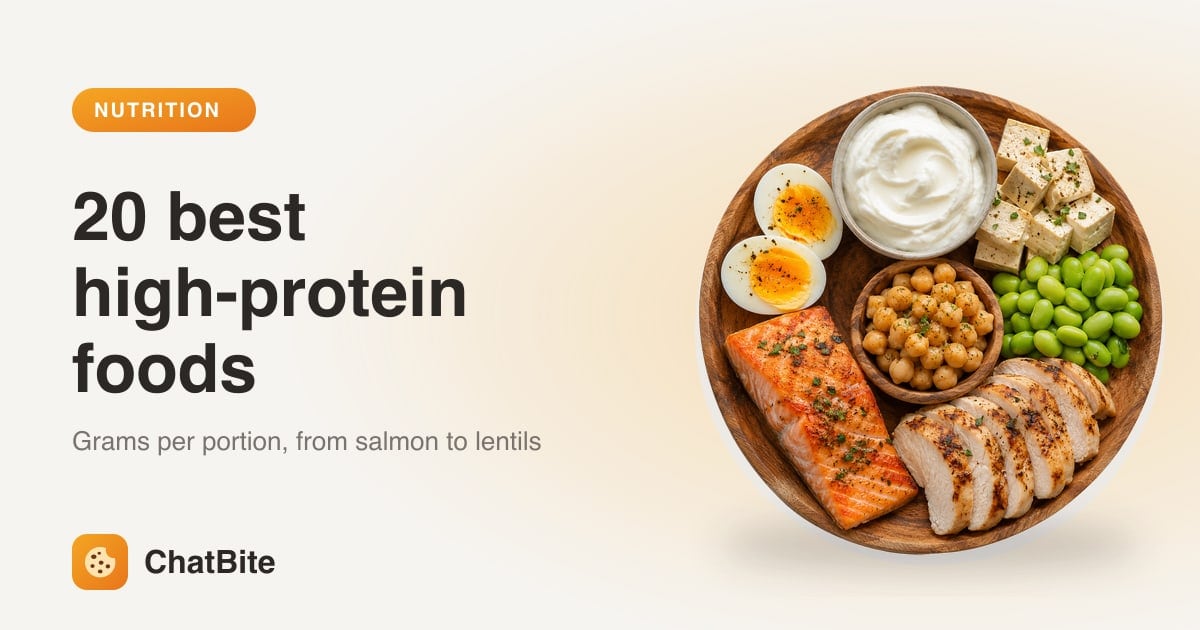
The highest-protein everyday foods are lean meat, fish and seafood, with about 22 to 31 g of protein per 100 g cooked, followed by tofu, tempeh, Greek yogurt, cottage cheese, eggs, beans and lentils. Plant foods have less protein per bite but plenty per meal: a cup of cooked lentils gives about 18 g. This list covers 20 of the best high-protein foods from around the world, with protein and calories per realistic portion, plus how to build a day that reaches your target.
How much protein do you need?
The baseline for healthy adults is 0.8 g of protein per kg of body weight a day, so about 56 g for a 70 kg person. That's the minimum to avoid a shortfall, not the ideal. Research on weight loss, muscle building and older adults often points to 1.2 to 1.6 g per kg, which is roughly 85 to 110 g a day at 70 kg. Spreading it across meals, about 25 to 40 g each, works better than one large serving at dinner.
High-protein foods list: animal sources
Values are approximate, for cooked food unless stated, based on USDA FoodData Central. Brands and cooking methods vary, so check the label where there is one.
| Food | Portion | Protein | Calories |
|---|---|---|---|
| Chicken breast, skinless | 100 g | 31 g | 165 kcal |
| Lean beef (90% lean) | 100 g | 26 g | 215 kcal |
| Tuna, canned in water, drained | 100 g | 25 g | 115 kcal |
| Shrimp / prawns | 100 g | 24 g | 100 kcal |
| Salmon | 100 g | 22–25 g | 180–205 kcal |
| Turkey breast | 100 g | 29 g | 150 kcal |
| Greek yogurt, plain, non-fat | 170 g pot | 17 g | 100 kcal |
| Cottage cheese, low-fat | 100 g | 11 g | 80 kcal |
| Eggs | 2 large | 12–13 g | 145 kcal |
| Milk | 1 cup (240 ml) | 8 g | 100–150 kcal |
Fish and seafood stand out on protein for the calories: shrimp and canned tuna give around 24 to 25 g for about 100 to 115 kcal. Salmon has more calories than white fish because of its fat, but much of that is the omega-3 fat that health bodies recommend eating once or twice a week.
High-protein vegetarian and plant foods
| Food | Portion | Protein | Calories |
|---|---|---|---|
| Tempeh | 100 g | 20 g | 190 kcal |
| Lentils, cooked | 1 cup (200 g) | 18 g | 230 kcal |
| Edamame, shelled | 1 cup (155 g) | 18 g | 190 kcal |
| Tofu, firm | 100 g | 12–17 g | 110–145 kcal |
| Paneer | 100 g | 18–20 g | about 300 kcal |
| Black beans, cooked | 1 cup (170 g) | 15 g | 225 kcal |
| Chickpeas, cooked | 1 cup (165 g) | 14–15 g | 270 kcal |
| Quinoa, cooked | 1 cup (185 g) | 8 g | 220 kcal |
| Peanut butter | 2 tablespoons | 7–8 g | 190 kcal |
| Almonds | 28 g (a small handful) | 6 g | 165 kcal |
Soy foods like tofu, tempeh and edamame contain all the essential amino acids, as do dairy foods like paneer and Greek yogurt. Beans, lentils and grains each fall short on one or two, but eating a mix across the day, such as rice with dal, hummus with pitta, or beans with corn tortillas, covers them. Nuts and nut butters are useful extras, but their calories add up fast, so treat them as a top-up rather than the main source.
Which high-protein foods are lowest in calories?
If you're trying to lose weight, protein per 100 calories is a handy way to compare. Shrimp, canned tuna, chicken and turkey breast, non-fat Greek yogurt and low-fat cottage cheese all give about 14 to 25 g of protein per 100 kcal. Lentils and beans give about 7 g per 100 kcal, but they bring fiber too, which also helps you feel full.
A high-protein day from different cuisines
Here's how about 100 g of protein can look without protein shakes, using foods from the tables above.
| Meal | What you eat | Protein (about) |
|---|---|---|
| Breakfast | Greek yogurt pot with berries and a few almonds | 20 g |
| Lunch | Japanese-style bowl: 150 g firm tofu, edamame, rice and vegetables | 30 g |
| Snack | 2 boiled eggs | 12 g |
| Dinner | Mexican-style: 120 g grilled chicken, black beans, salsa and a tortilla | 45 g |
| Total | about 107 g |
A vegetarian version could swap the chicken dinner for a cup of dal with 100 g of paneer and rice, which comes to roughly 40 g. The pattern is the same either way: one clear protein source at every meal.
How to keep track of your protein
Knowing the numbers is one thing; adding them up across a busy day is another. Most people overestimate how much protein they eat, especially at breakfast and lunch.
ChatBite is an AI calorie and protein coach that works inside WhatsApp and Telegram: you send a photo, a few words or a voice note, and it logs your meal and tracks your day. Type “2 eggs and toast” or snap your lunch bowl, and the Logged card shows the protein next to calories, carbs and fat, with a progress bar toward your daily target. You can also ask questions like “what's a high-protein vegetarian snack?” and get an answer that fits the diet you've told it about.
What food has the most protein?
Per 100 g, lean meats and fish lead everyday foods: cooked chicken breast has about 31 g and turkey breast about 29 g. Among plant foods, tempeh and firm tofu are highest, with about 12 to 20 g per 100 g.
What are the best high-protein vegetarian foods?
Greek yogurt, cottage cheese, paneer, eggs, tofu, tempeh, edamame, lentils, beans and chickpeas. A cup of cooked lentils or edamame gives about 18 g of protein.
How can I get 30 g of protein in a meal?
Use about 100 g of cooked chicken, turkey or tuna, or combine smaller amounts: two eggs plus a pot of Greek yogurt gives about 29 g, and 150 g of firm tofu with a cup of edamame gives about 36 to 43 g.
Are eggs a good source of protein?
Yes. One large egg has about 6 g of high-quality protein for roughly 70 kcal, though you need two or three to make a protein-rich meal on their own.
Is too much protein bad for you?
For healthy adults, intakes up to about 1.6 g per kg are common in research and generally well tolerated. If you have kidney disease or another medical condition, ask a doctor or registered dietitian what's right for you.
Sources: USDA FoodData Central; NIH and the National Academies (Dietary Reference Intakes for protein); Harvard T.H. Chan School of Public Health, The Nutrition Source; NHS; British Nutrition Foundation.
Values are typical estimates for home-style food and vary by recipe and portion. This is general information, not medical advice.
Put it into practice
Snap your next meal and ChatBite does the maths. Free for 7 days, no card needed.