How much fiber do you need a day? Fibermaxxing in 2026
Fibermaxxing is 2026's breakout food trend. Adults need about 25–38 g of fiber a day, yet most eat half that. Here's how to close the gap without bloating.
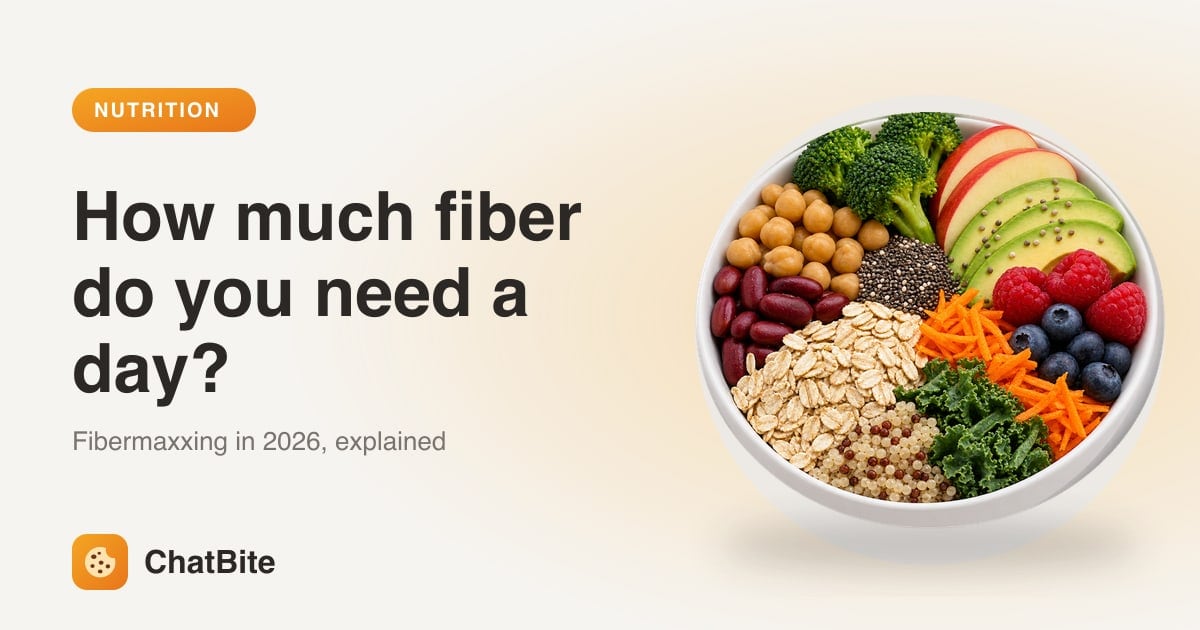
Most adults need about 25 to 38 grams of fiber a day: around 25 g for women and 38 g for men under 51, a little less after that. The catch is that most people eat far less, often around 15 g. That gap is why “fibermaxxing”, eating deliberately high-fiber meals, became 2026's breakout food trend, with many dietitians calling fiber “the new protein”. This guide covers how much fiber you really need, why it matters, the best fiber foods from around the world, and how to add more without the bloating.
How much fiber do you need per day?
The National Academy of Medicine sets these daily targets, and the US Dietary Guidelines offer a simple rule of thumb: about 14 grams of fiber for every 1,000 calories you eat. The UK's NHS recommends 30 g a day for adults.
| Who | Fiber per day |
|---|---|
| Women, 19–50 | 25 g |
| Men, 19–50 | 38 g |
| Women, 51 and over | 21 g |
| Men, 51 and over | 30 g |
| Rule of thumb (US Dietary Guidelines) | 14 g per 1,000 kcal |
| UK (NHS) | 30 g for all adults |
Why is fiber so good for you?
In 2019, a major review in The Lancet, commissioned by the World Health Organization, pooled data from 185 long-term studies and 58 clinical trials. People who ate the most fiber had a 15 to 30% lower risk of dying from any cause and from heart disease than those who ate the least, along with lower rates of type 2 diabetes and bowel cancer. The authors suggested aiming for at least 25 to 29 g a day.
Fiber also helps with weight. It adds bulk to meals without many calories, slows digestion and keeps you full. In the trials in that same review, higher fiber intake was linked to lower body weight, blood pressure and cholesterol.
What is fibermaxxing, and is it a good idea?
Fibermaxxing means building meals around fiber on purpose, usually by adding beans, seeds, whole grains, fruit and vegetables to everything. Some social media versions push 50, 70 or even 80+ grams a day.
The core idea is sound: most people would benefit from eating more fiber. The extreme versions are where it goes wrong. Doctors warn that jumping suddenly to very high amounts can cause bloating, gas, cramps and constipation, especially if you don't drink enough water. For most people, simply reaching the recommended 25 to 38 g is the real win.
Which foods are highest in fiber?
Approximate fiber per portion, from USDA FoodData Central. Mix several each day: dietitians suggest eating at least five different fiber sources daily, because different plants feed different gut bacteria.
| Food | Portion | Fiber (about) |
|---|---|---|
| Lentils, cooked | 1 cup | 15–16 g |
| Black beans, cooked | 1 cup | 15 g |
| Chickpeas, cooked | 1 cup | 12–13 g |
| Chia seeds | 2 tablespoons | 8–10 g |
| Raspberries | 1 cup | 8 g |
| Pear, with skin | 1 medium | 5–6 g |
| Broccoli, cooked | 1 cup | 5 g |
| Avocado | half | 5 g |
| Apple, with skin | 1 medium | 4–4.5 g |
| Oats, dry | 40 g (half a cup) | 4 g |
| Popcorn, air-popped | 3 cups | 3.5 g |
| Whole-wheat bread | 1 slice | 2 g |
What does a 30-gram fiber day look like?
- Breakfast: 40 g of oats with half a cup of raspberries (about 4 + 4 = 8 g).
- Lunch: 2 slices of whole-wheat bread with hummus, plus an apple (about 4 + 2 + 4.5 = 10.5 g).
- Snack: a pear (about 5.5 g).
- Dinner: half a cup of black beans or lentils with 1 cup of broccoli and rice (about 7.5 + 5 = 12.5 g).
That adds up to about 36 g, from everyday foods in any cuisine: swap the beans for dal, the oats for a bowl of bran cereal, or the pear for a handful of berries.
How to increase fiber without bloating
- Go slowly: add about 5 g at a time and give your gut a few days to adjust before adding more.
- Drink more water as you add fiber; it needs fluid to work well.
- Spread it across the day instead of loading one meal.
- Choose whole foods first. Fiber supplements are fine as a top-up, but they don't bring the vitamins and variety of plants.
- Keep the skins on fruit and potatoes, and pick whole grains over refined ones.
Fiber or protein: which matters more?
You don't have to choose. Protein protects muscle and keeps you full; fiber keeps you full and supports your heart and gut. Many of the best foods give you both: lentils, beans, chickpeas, edamame and chia seeds are rich in protein and fiber. A plate with a protein source, a whole grain and plenty of vegetables covers both.
How to know whether you're getting enough
Most people overestimate their fiber. Logging your meals for a week is the easiest way to see where you stand and which swaps make the biggest difference.
ChatBite is an AI calorie and protein coach that works inside WhatsApp and Telegram: you send a photo, a few words or a voice note, and it logs your meal and tracks your day. You can also ask it questions like “how can I add more fiber to my breakfast?” or “give me a high-fiber vegetarian dinner idea”, and it answers with options that fit your diet and your day so far.
How much fiber should I eat a day?
About 25 g for women and 38 g for men aged 19 to 50, and about 21 g and 30 g after 51. The UK recommends 30 g a day for all adults.
Is 50 g of fiber a day too much?
It can be more than your gut is used to. If you want to go higher than the recommendations, increase slowly over weeks and drink plenty of water; if you have a digestive condition, ask your doctor first.
Does fiber help you lose weight?
It can help. Fiber adds volume to meals with few calories and keeps you full, and higher-fiber diets are linked to lower body weight in clinical trials.
What's the easiest way to eat more fiber?
Add one high-fiber food to each meal: beans or lentils at lunch or dinner, berries or chia at breakfast, and fruit or popcorn as a snack.
Are fiber supplements as good as food?
They can help close a gap, but whole foods are better: they bring different types of fiber plus vitamins, minerals and other plant compounds.
Sources: National Academy of Medicine (Dietary Reference Intakes); Dietary Guidelines for Americans; NHS; Reynolds et al., The Lancet (2019); USDA FoodData Central; University of Utah Health; NPR.
This article is general information, not medical advice. If you have a digestive condition, are pregnant or have another medical condition, talk to a doctor or registered dietitian before making big changes to your diet.
Values are typical estimates for home-style food and vary by recipe and portion. This is general information, not medical advice.
Put it into practice
Snap your next meal and ChatBite does the maths. Free for 7 days, no card needed.